
6 min read
Planning a mudroom addition for your New England home can transform your entryway into a functional space that accommodates your family’s needs. A well-designed mudroom not only provides a place to store shoes, coats, and outdoor gear but also protects your home from the elements. This guide will walk you through essential considerations such as layout, durable materials, storage solutions, and weather protection to help you create the perfect mudroom.
As you embark on this journey, envision a space that reflects your style while serving practical purposes. Whether you dream of a cozy nook for winter gear or a spacious area for family activities, understanding the fundamentals of planning a mudroom addition will ensure your vision becomes a reality. Let’s dive into the key aspects of creating your mudroom oasis.
Mudroom Addition Layout Considerations
The layout of your mudroom is crucial for maximizing functionality. Start by assessing your available space and determining how you want to use it. Consider the following layout options:
- Linear Layout: Ideal for narrow spaces, this layout features a long, straight design with storage along one wall.
- L-Shaped Layout: Perfect for corners, this configuration utilizes two adjacent walls, providing ample storage and workspace.
- U-Shaped Layout: This design maximizes storage by using three walls, creating a cozy, enclosed area.
When planning your layout, think about traffic flow. Ensure that the entrance is easily accessible and that there’s enough space for family members to move in and out comfortably. Additionally, consider integrating features like benches, hooks, and cubbies to enhance usability.
Durable Materials: Building for the Elements
In New England, your mudroom will face harsh weather conditions, so choosing durable materials is essential. Here are some materials to consider:
- Flooring: Opt for resilient flooring options such as tile, vinyl, or luxury vinyl planks that can withstand moisture and heavy foot traffic.
- Walls: Use washable paint or beadboard for easy maintenance. If you prefer a rustic look, consider shiplap or reclaimed wood.
- Storage Units: Choose cabinetry materials and finishes suited to the room’s moisture exposure; keep vulnerable edges protected from wet gear.
By selecting materials that can endure the wear and tear of daily use, you’ll ensure your mudroom remains functional and attractive for years to come.
Smart Storage Solutions: Keeping Clutter at Bay
Effective storage is a key component of any mudroom. Here are some smart storage solutions to consider:
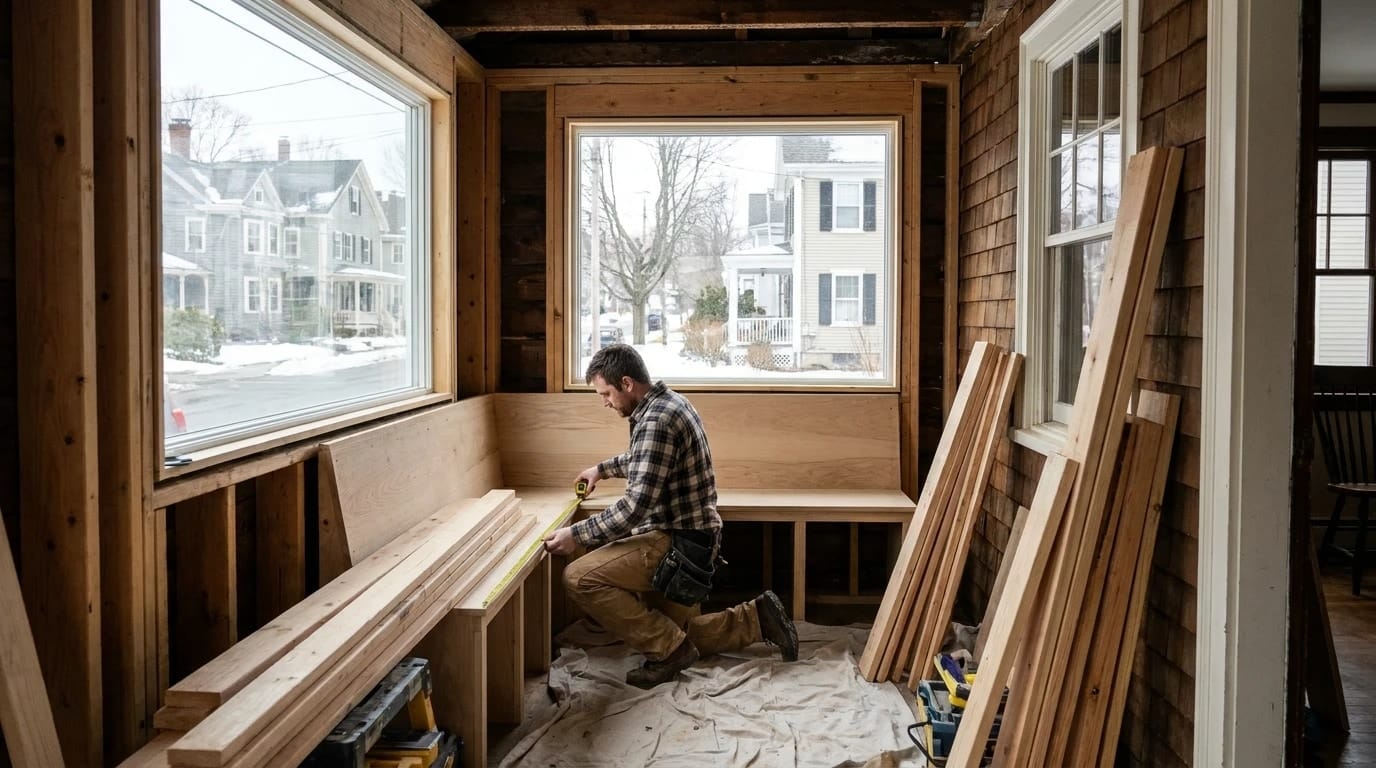
- Built-In Benches: Incorporate a bench with storage underneath for shoes and bags.
- Wall Hooks: Install hooks at various heights to accommodate both adults and children.
- Cubbies: Create cubbies for each family member to keep personal items organized.
- Overhead Shelving: Utilize vertical space by adding shelves above the bench for seasonal items.
These storage solutions will help maintain an organized and clutter-free environment, making it easier for your family to transition from the outdoors to the indoors.
Weather Protection: Shielding Your Home
Weather protection is vital for any mudroom addition, particularly in New England’s unpredictable climate. Consider these features:
- Insulated Doors: Install a solid, insulated door to minimize heat loss and keep cold drafts at bay.
- Weather Stripping: Use weather stripping around doors and windows to prevent air leaks.
- Drainage Solutions: Plan for wet footwear with washable mats or trays. If considering a floor drain, consult your design and plumbing team about feasibility and local requirements.
These measures can help manage drafts and moisture. The U.S. Department of Energy’s weatherization guide discusses weatherstripping and other improvements.
Permits and Regulations: Navigating Local Codes
Before starting your mudroom addition, it’s essential to understand local building codes and regulations. In Newburyport, you may need to obtain permits for your project, especially if your home is in a historic district. Here are some steps to follow:
- Check Zoning Regulations: Ensure your addition complies with local zoning laws regarding setbacks and height restrictions.
- Obtain Necessary Permits: Apply for building permits through your local government, which may require plans from a licensed architect or contractor.
- Consult the Historic District Commission: If your home is in a historic district, you may need to present your plans to the commission for approval.
By adhering to these regulations, you’ll avoid potential fines and ensure a smoother construction process.
Working with Professionals: The Right Team for Your Project
Choosing the right team for your mudroom addition is crucial for a successful project. At Greene Design and Build, we specialize in custom home renovations and have over 30 years of experience in the Newburyport area. Here’s how we can assist you:
- Integrated Design-Build Process: We manage every aspect of your project, from the initial design to the final walkthrough.
- Expertise in Historic Homes: Our team is well-versed in navigating the complexities of historic district regulations.
- Personalized Service: We involve you in every key decision, ensuring your vision is realized.
By partnering with us, you’ll have peace of mind knowing that your mudroom addition is in capable hands.
Final Touches: Creating Your Dream Mudroom
Once your mudroom is built, it’s time to add the finishing touches that reflect your personal style. Consider incorporating decorative elements such as:
- Artwork: Hang family photos or local artwork to personalize the space.
- Rugs: Add durable rugs that can withstand moisture and provide a cozy feel.
- Plants: Incorporate greenery to bring life and freshness to your mudroom.
These final touches will make your mudroom not only functional but also a welcoming space for your family and guests.
Conclusion
A mudroom addition can make daily arrivals more organized when the layout, materials and weather protection are planned together. Explore our home addition services and contact us to discuss your project.
Frequently Asked Questions
What is the average cost of a mudroom addition?
The cost of a mudroom addition varies based on size, materials, and design. It’s best to consult with a contractor for a detailed quotation tailored to your specific needs.
How long does it take to build a mudroom addition?
The timeline for a mudroom addition can range from a few weeks to a few months, depending on the complexity of the design and any permitting processes involved.
Can I design my mudroom to match my home’s style?
Absolutely! A well-designed mudroom can complement your home’s existing architecture and style. Our team at Greene Design and Build can help you achieve this.
What are the best materials for mudroom flooring?
Durable options like tile, vinyl, or luxury vinyl planks are ideal for mudroom flooring due to their resistance to moisture and easy maintenance.
Do I need a permit for a mudroom addition?
Yes, you will likely need a permit for a mudroom addition, especially in historic districts. It’s essential to check local regulations before starting your project.

0 Comments