
Homes from Newburyport to Ipswich and along the New Hampshire Seacoast offer distinct character and lasting value. Many homeowners choose to preserve these qualities through renovation instead of tearing down and starting over.
However, most North Shore homeowners ask the same question before starting a project: “What will living in my home feel like during the renovation?”
Greene Design and Build has worked with hundreds of homeowners over the last four decades. We know that careful planning can make the renovation process much easier. A design-build firm can manage the project, provide daily updates, and organize the schedule around your lifestyle.
In this guide, we explain what to expect when you live at home during a renovation.
What Is Life Like While Renovating a North Shore Home?
A renovation project moves through several phases. Demolition and framing create the most noise and disruption. This stage can last from a few days to several weeks, depending on the project’s size.
Next, the crew installs new plumbing, electrical wiring, and HVAC lines inside the walls. They then add insulation and drywall. Finally, painters and craftspeople complete the space with paint, cabinets, trim, and fixtures.
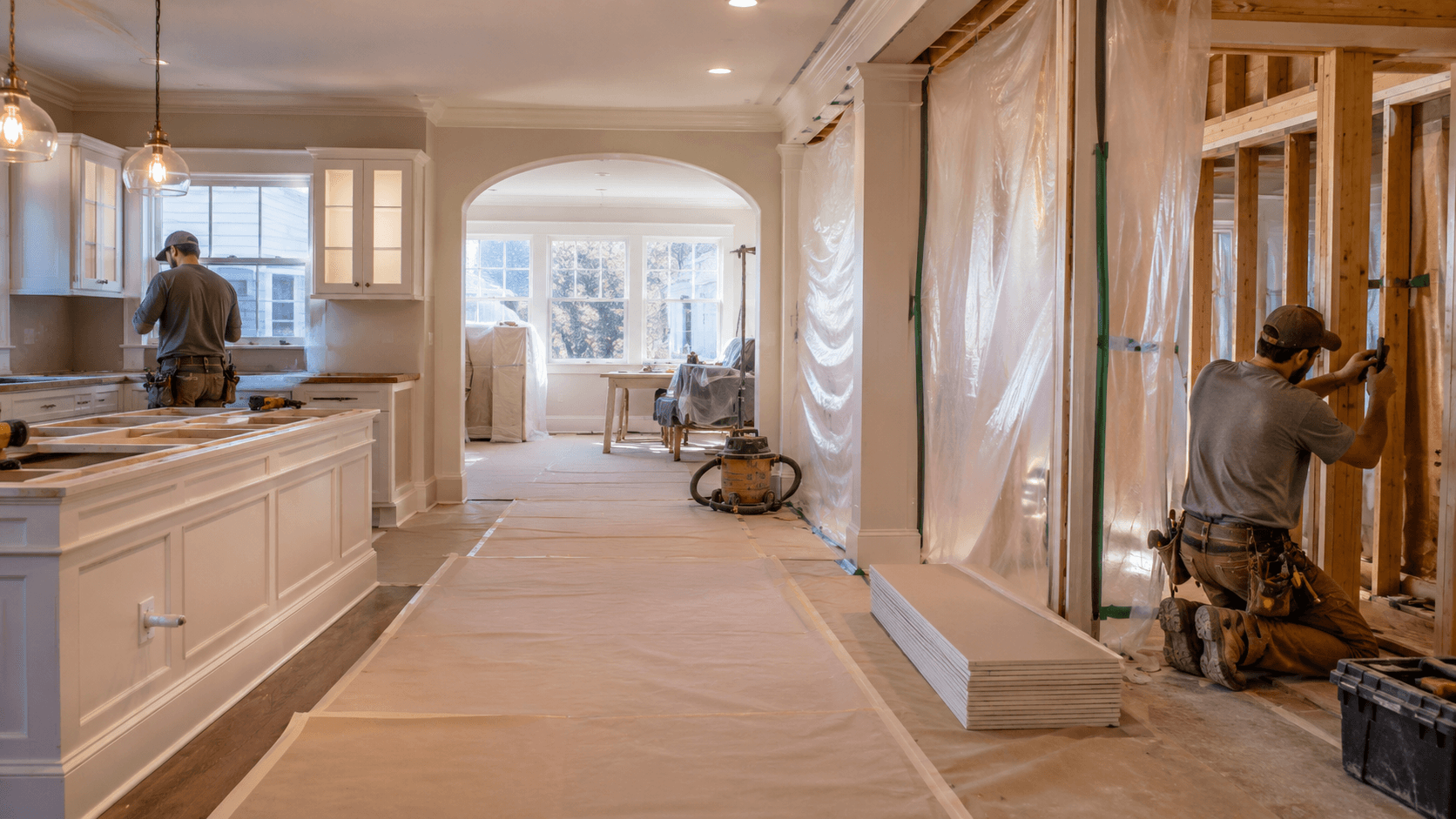
During construction, your home will have designated work zones. Crews will install plastic barriers to help contain dust. You may also see building materials stored in the driveway or yard.
Most crews arrive between 7:00 and 8:00 AM and remain on-site until the end of the workday.
If you work from home, choose a quiet room away from the construction area. This space can help you stay focused during the day. Families with children or pets should also establish clear boundaries around each work zone.
Can You Stay in Your Home While It Is Being Renovated?
You can often stay home if the project has a limited scope. For example, most homeowners can remain comfortable during a bathroom remodel. Having access to a second bathroom makes this arrangement much easier.
Many homeowners also remain at home during a kitchen remodel. They create a temporary kitchen with a microwave, mini fridge, coffee maker, and other small appliances.
Larger projects may require a different approach. For example, you may want to move into a short-term rental during a primary suite or second-story addition.
Moving may also make sense if the project limits access to essential utilities or main living areas. Excessive noise can create another challenge, especially if you work from home.
Make this decision during the design phase. Your contractor can then plan the construction schedule around your living arrangements.
Tips for Preparing for a Renovation Project
Move Furniture and Belongings to Safe Locations
Dust can travel much farther than you expect. Before demolition begins, remove artwork, electronics, decorations, and personal items from the work area. You should also clear nearby rooms when possible.
Cover furniture that you cannot move. In addition, seal the HVAC vents inside the construction zone. This step prevents the system from circulating dust throughout your home.
Your contractor should install zip-wall barriers to control dust. Still, protecting your belongings provides another helpful layer of protection.
Designate a Temporary Kitchen or Bathroom Space
If you are remodeling your kitchen, convert another area into a temporary food preparation space. Add a microwave, coffee maker, toaster oven, mini fridge, paper plates, and utensils.
Create a meal plan before construction starts. Simple dinners, frozen meals, and takeout can reduce stress while you lack a full kitchen.
If you are remodeling a bathroom, plan how your household will share the remaining facilities. A clear schedule can help prevent disruptions during busy mornings.
Notify Your Neighbors
Neighbors will notice your project, especially in downtown Newburyport or the Historic District. They may see trucks, workers, building materials, and a dumpster. They will also hear construction noise.
Tell your neighbors about the project before work begins. Share the expected schedule, daily working hours, and dumpster location.
This courtesy matters in crowded neighborhoods with limited street parking. Early communication can prevent frustration and maintain good relationships.
How a Design-Build Firm Makes Renovations More Manageable
Your choice of contractor will affect how much disruption you experience. In a traditional design-bid-build process, separate companies handle the design and construction. This arrangement can create communication gaps and delays.
A North Shore design-build contractor gives you one point of contact from the first sketch through the final walkthrough. This structure reduces surprises and keeps the project moving forward.
Greene Design and Build keeps you informed throughout the renovation. Once construction begins, we provide daily updates. You will know what the crew completed, what comes next, and whether we need your input.
We also treat your home, family, and schedule with respect. Owner Greg Greene remains personally involved in every project to maintain quality and accountability.
What Happens After Construction Wraps Up?
You may need a short adjustment period after the crew packs away the final tool. A professional cleaning should make your renovated space ready to use. However, small amounts of dust may continue to settle for a week or two.
Your contractor should complete a final walkthrough with you. During this meeting, you can inspect the work and create a punch list for any remaining items.
At Greene Design and Build, we use the final walkthrough to confirm that the finished space matches the approved design. We also check that the craftsmanship meets our quality standards.
A reliable contractor should also follow up after completing the project. Materials may settle, and paint needs time to cure. You may also notice something that needs adjustment after using the space.
Choose a contractor who remains available and addresses any concerns that arise.
Planning Your North Shore Renovation With Confidence
Living through a renovation causes temporary disruption, but the finished space provides lasting value. Your home can better support your family, reflect your style, and preserve its North Shore character.
Preparation and communication make the experience easier. Choose a contractor you trust, protect your belongings, and establish clear expectations before work begins.
Greene Design and Build brings more than 40 years of experience to every project. We have built more than 25 custom homes throughout Greater Newburyport and hold an A+ rating with the BBB. North Shore homeowners continue to trust our team with renovations, additions, and custom homes.
If you are considering a renovation, addition, or new custom home, call Greene Design and Build at 978-790-4881. You can also visit greenedesignandbuild.com to schedule a free consultation.
We will explain the design-build process, answer your questions, and help you plan a successful renovation.
FAQs About Living Through a Home Renovation
Can I stay in my house while renovating, or should I move out?
Most North Shore homeowners can stay home while renovating one room, such as a bathroom or small kitchen. A few temporary adjustments can make the arrangement manageable.
Moving may make more sense if you plan to renovate the entire house or add a second story. You should also consider moving if the project requires extended utility shutoffs.
At Greene Design and Build, we discuss this decision during the design phase. We can then plan the construction schedule around your needs.
How do I prepare my house for living through a renovation?
Remove belongings from the work area and nearby rooms. Cover furniture, seal HVAC vents, and create temporary living spaces away from construction.
Tell your neighbors when the crews will work, especially if you live in downtown Newburyport. Your contractor should also install dust barriers and establish safe zones for children and pets.
How long does a home renovation usually take on the North Shore?
The timeline depends on the project’s size, permit processing, and the home’s age. A bathroom renovation may take a few weeks. A kitchen remodel often takes two to three months.
An addition or whole-house renovation may take several months or longer than a year. Older homes sometimes require more time because they have unique materials or structural conditions. Historic commission approvals can also extend the schedule.
Greene Design and Build provides a clear timeline during the design phase. Once construction begins, we keep you informed with daily updates.
0 Comments